













Ashtavinayak: The Eight Sacred Forms of Lord Ganesha in Maharashtra
Discover the spiritual significance of Ashtavinayak, the eight sacred forms of Lord Ganesha located across Maharashtra. ...
Read MoreMaa Maha Gauri is worshipped on the eighth day of Navratri and represents purity, serenity, compassion and spiritual transformation. Explore her story, symbolism, puja rituals, mantra, offerings and the traditional significance of Durga Ashtami.
Maha Gauri is the eighth manifestation of Goddess Durga, worshipped on the Ashtami Tithi of Navratri. She symbolizes purity, serenity and kindness. The name “Maha Gauri” translates as “extremely fair,” reflecting her bright and radiant form.
Clad in white attire and traditionally depicted riding a bull, Maa Maha Gauri embodies peace, forgiveness, compassion and the cleansing power of devotion. Devotees seek her blessings for inner peace, prosperity, harmony and the fulfilment of sincere wishes.
According to the traditional account presented on Astroshastra, Goddess Parvati performed intense penance to please Lord Shiva and endured severe hardships. Her complexion became dark during this period of austerity. Pleased with her devotion, Lord Shiva accepted her as his consort and blessed her with a radiant, golden-white appearance, giving rise to the name Maha Gauri.
Another devotional interpretation describes Maha Gauri as a compassionate form who blesses devotees with a life free from suffering and represents the victory of purity over darkness. Her story highlights the transformative power of sincere devotion, patience and spiritual discipline.
Her bright complexion and white clothing symbolize purity, peace, clarity and the cleansing of negative tendencies.
The bull is associated with steadiness, strength and disciplined spiritual energy, complementing her serene form.
Her gentle aspect represents forgiveness, kindness, emotional peace and the grace that follows sincere devotion.
The eighth day of Navratri is widely known as Durga Ashtami and is regarded as one of the most auspicious stages of the Nav Durga worship sequence. Devotees turn toward Maa Maha Gauri for purification, peace and blessings for a harmonious life.
Many devotees also perform Kanya Pujan on Ashtami, offering food, gifts and respect to young girls as a devotional representation of the Divine Mother.
Om Devi Mahagauryai Namah
Devotees traditionally recite this mantra with devotion while praying for purity, peace, grace, prosperity and spiritual clarity.
Offerings can vary according to regional customs, family traditions and personal devotional practice. The source page specifically highlights white flowers, milk, coconut and sweets such as kheer or halwa puri.
Traditionally associated with purity, serenity and peaceful divine energy.
A simple sattvic offering associated with purity and nourishment.
Commonly offered in devotional worship as part of a sincere prayer.
A traditional sweet offering that may be prepared as bhog for the Goddess.
Often included in Ashtami devotional meals according to family and regional practice.
Many devotees honour young girls with food and gifts as a symbolic expression of reverence for the Divine Mother.
The source page associates Maha Gauri with the planet Rahu and describes her worship as a traditional spiritual practice believed to reduce the malefic influence of Rahu and support mental clarity, emotional stability and good fortune.
For astrology-based remedies, individual horoscope factors should be considered rather than applying a single remedy universally. Devotional worship can be approached as a spiritual practice alongside appropriate astrological guidance.
In the Nav Durga sequence, Maa Maha Gauri is worshipped on the eighth day of Navratri. After the intense and protective energy associated with Maa Kalratri on Day 7, Maha Gauri represents a transition toward serenity, purification and divine grace. The day is especially meaningful for prayers for peace, harmony, forgiveness and spiritual renewal.
Continue exploring Astroshastra’s Navratri, Navratre and Maa Durga resources for information on the nine forms of Goddess Durga, worship practices, puja preparation, spiritual traditions, mantras and festival guidance.
Maa Maha Gauri is the eighth form of Goddess Durga and is worshipped on the eighth day of Navratri, especially during Durga Ashtami.
Maa Maha Gauri is worshipped on Day 8 of the Nav Durga sequence.
She symbolizes purity, serenity, compassion, forgiveness, peace and spiritual transformation.
The mantra presented on the Astroshastra page is: ॐ देवी महागौर्यै नमः॥
The source page highlights white flowers, milk, coconut and sweets such as kheer or halwa puri. Offerings may vary according to family and regional tradition.
Durga Ashtami is considered an auspicious day of Navratri. Devotees worship Maa Maha Gauri and many families also perform Kanya Pujan as part of their Ashtami observances.
Discover more Navratri, Navratre and Maa Durga guidance on Astroshastra and continue your spiritual journey through the nine forms of Goddess Durga.
Explore NavratriExplore Vedic Astrology, Numerology, Vastu, Panchang, Nakshatras, Ayurveda, Mantras and Spiritual Wisdom.
Personalized astrology consultations, predictions and remedies prepared by experienced Vedic astrologers.
Explore hand-picked articles related to this topic to deepen your astrological knowledge.
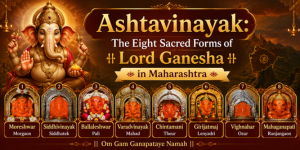
Discover the spiritual significance of Ashtavinayak, the eight sacred forms of Lord Ganesha located across Maharashtra. ...
Read More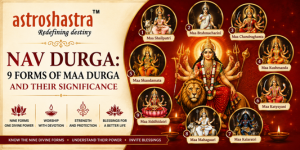
Discover the 9 forms of Maa Durga, known as Nav Durga or Navadurga, and learn their names, symbolism, spiritual signific...
Read More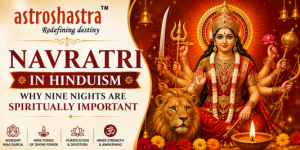
Discover the spiritual significance of Navratri in Hinduism, the nine forms of Maa Durga, Navadurga worship, fasting, Ka...
Read More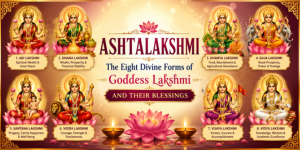
Discover the sacred Ashtalakshmi, the eight forms of Goddess Lakshmi who bestow wealth, prosperity, courage, knowledge, ...
Read More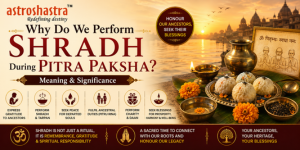
Why is Shradh performed during Pitra Paksha? Understand the spiritual meaning of Shraddha, Pitra Tarpan, ancestral remem...
Read More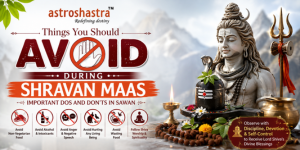
Discover the important things to avoid during Shravan Maas according to Hindu traditions. Learn the spiritual significan...
Read More